
Crisis Management Consulting
Build a crisis management team, strengthen decision-making capabilities and practise realistic crisis scenarios
Crisis management enables organisations to remain capable of acting and making decisions even in dynamic and difficult-to-predict situations. When information is incomplete, several areas are affected at the same time and decisions must be made under intense time pressure, a well-prepared crisis management organisation is essential.
3-core’s crisis management consulting services help you establish suitable leadership and decision-making structures or further develop existing arrangements. Together, we clarify the crisis management team’s roles, authority and ways of working, develop a practical crisis management manual and prepare everyone involved for a crisis through training, tabletop exercises and simulations.
- Crisis management organisation with clear roles, authority and deputy arrangements
- Structured situation management and transparent decision-making processes
- A practical crisis management manual with fit-for-purpose tools
- A prepared crisis management team with a shared understanding of roles and methods
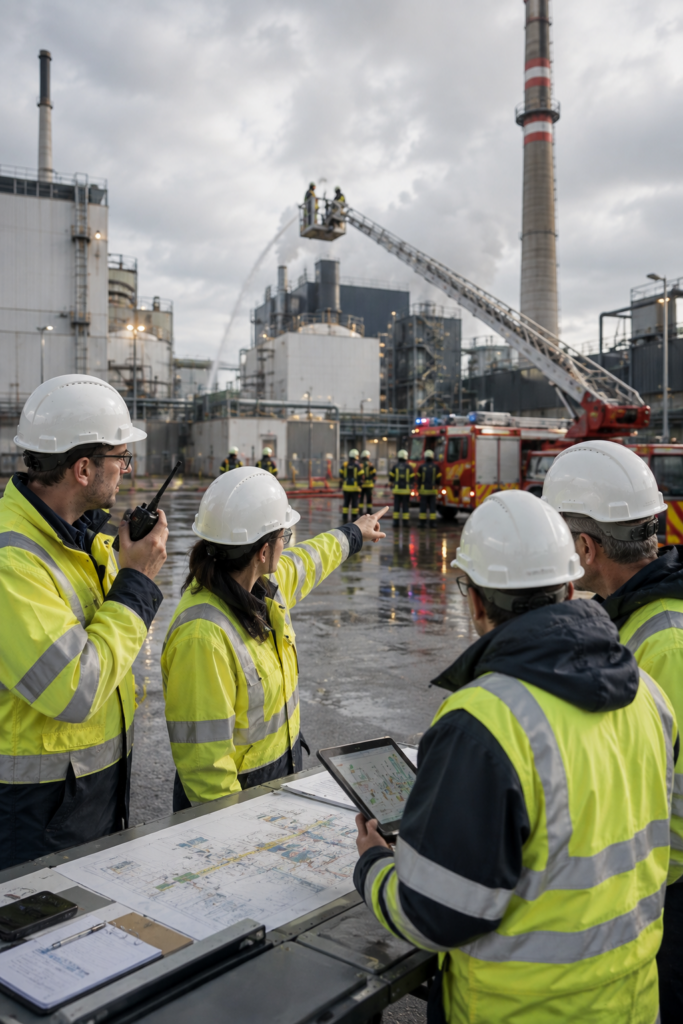
Crisis management that provides direction amid uncertainty
A crisis cannot be planned for in every detail like a standard scenario. However, organisations can prepare the structures needed to consolidate information, assess the situation, make decisions and coordinate measures. This operational capability determines whether a crisis management team can lead effectively under time pressure.
We combine organisational design with practical application. Our work covers not only organisational structures and documentation, but also collaboration within the crisis management team, the quality of the shared situational picture, the handling of incomplete information, the documentation of decisions and interfaces with operational units and communications.
When crisis management consulting adds value
Our consulting services support organisations seeking to establish crisis management, standardise existing arrangements or put them into practice. Typical starting points include:
- A crisis management team has been appointed, but roles and decision-making authority are not clearly defined.
- The crisis management manual, notification lists or working templates are outdated or difficult to use.
- Sites or business units use different crisis management structures.
- The situational picture, record-keeping and action tracking do not follow a consistent process.
- Interfaces with emergency management, BCM, IT, security, HR or communications have not been clarified.
- The crisis management team has not yet received role-specific training or taken part in a realistic exercise.
- Lessons from incidents, audits or exercises need to be implemented systematically.
Our crisis management consulting services
Depending on your starting point, 3-core can support individual work packages or the complete development of your crisis management organisation. The scope and level of detail are tailored to your organisational structure, sites, risk profile and current level of maturity.
Current-state and maturity assessment
We review existing arrangements, roles, tools and lessons from exercises or real events. Interviews and workshops reveal which structures are already effective, where uncertainties remain and which improvements should be prioritised.
Crisis management organisation and governance
We develop a clear organisational and procedural framework for crisis management. This covers scope, activation, leadership structure, decision-making authority, deputy arrangements and integration within the organisation.
Crisis management team, roles and collaboration
We support the composition and structuring of the crisis management team. Roles, responsibilities and expectations are defined so that strategic leadership, situation management, coordination and specialist input work together effectively. We also account for deputies and the involvement of additional specialist functions.
Activation and escalation
We define the criteria and decision-making pathways for activating the crisis management organisation. This includes determining who assesses a situation, convenes the crisis management team and escalates operational incidents to the strategic crisis leadership. This keeps responsibilities clear across business-as-usual operations, the emergency response organisation and the crisis management team.
Crisis management manual and tools
We create a new crisis management manual or revise existing arrangements. The manual describes structures, roles and ways of working and is supplemented by practical tools such as notification overviews, agenda and minutes templates, role descriptions, action logs and situation management templates.
Situational picture, decisions and documentation
A shared situational picture provides the information basis for decision-making. We develop processes for gathering information, assessing the situation, setting priorities, making decisions and monitoring implementation. We also define how decisions, responsibilities and measures are documented transparently and tracked through to completion.
Stakeholder and communication interfaces
We identify relevant internal and external stakeholders and clarify responsibilities for information flows, approvals and coordination. Developing the content of crisis communications remains a discipline in its own right; here, the focus is on its organisational interface with the crisis management team.
Training, tabletop exercises and crisis management team exercises
Crisis management teams must be able to apply their roles, methods and tools with confidence. We design suitable training and exercise formats, develop realistic scenarios, facilitate delivery and document observations. Depending on the objective, the format may range from role-specific training and a tabletop exercise to a dynamic crisis simulation.
Evaluation and continual improvement
Nach Übungen oder realen Ereignissen bereiten wir Erkenntnisse strukturiert auf. Verbesserungsmaßnahmen werden priorisiert, Verantwortlichkeiten festgelegt und in die Weiterentwicklung von Krisenhandbuch, Arbeitsmitteln, Rollen und Trainingsplanung überführt.
What working with 3-core looks like

1. Clarify objectives and scope
We align on the organisation, sites, responsibilities and project objectives.

2. Assess the current position
Existing structures, documents and experience are systematically assessed.

3. Develop crisis organisation
Roles, mandates, decision-making pathways are defined.

4. Create documents and tools
The agreed arrangements are developed with practical application in mind.

5. Prepare the crisis management team
Training and exercises put the structures into practice for the crisis management team.

6. Implement lessons learned
Improvements are prioritised and incorporated into ongoing development.
Why choose 3-core as your crisis management partner
3-core combines specialist expertise with the practical preparation of executives and crisis management teams. Structures, documents and exercises are aligned with the organisation’s actual decision-making and communication pathways.
Independent:
Our consulting is guided by the organisation’s risks, structures and objectives.
Implementation-focused:
Concepts are translated into practical processes and tools.
Practical:
Workshops and exercises prepare participants to collaborate under time pressure.
Structured:
Clear project phases and prioritised measures provide transparency throughout the process.
Selected crisis management projects
The following case studies show how 3-core has delivered a range of crisis management assignments.
Crisis management team exercise for operational resilience in energy trading
Crisis management team training
Tabletop exercise workshop for a crisis scenario
A clear interface with emergency management
Emergency management coordinates prepared operational measures to contain an incident. Crisis management assumes strategic leadership when a situation becomes dynamic, affects multiple areas or has strategic significance.
The 3-core defines escalation criteria, handover points and responsibilities so that both structures work together without blurring their respective roles.
Free crisis management guide
The 3-core guide provides an initial overview of how to establish corporate crisis management. It supports internal assessment but does not replace a comprehensive analysis of the individual organisation or professional crisis management consulting.
Download the free crisis management guide
Frequently asked questions about crisis management consulting
What are the responsibilities of a crisis management team?
The crisis management team assesses the overall situation, develops options for action, makes or prepares strategic decisions and coordinates their implementation. It also ensures shared situational awareness and coordinated internal and external communications.
Who should be part of a crisis management team?
The composition depends on the organisation and the potential crisis scenario. The team requires clear leadership and functions that support decision-making, situation management, communications, documentation and the involvement of relevant specialist departments.
What should a crisis management manual contain?
A crisis management manual should describe the crisis management organisation, roles, authority, activation, ways of working, information flows, decision-making processes and documentation. It should be concise and ready for immediate use in a dynamic situation.
How does a crisis management team exercise work?
First, the objective, scenario and evaluation criteria are defined. During the exercise, the crisis management team works through an evolving situation. Its ways of working, decisions and collaboration are then evaluated and specific improvement measures identified.
Does 3-core also review existing crisis management structures?
Yes. 3-core reviews existing crisis management manuals, role models, ways of working and lessons from exercises. Gaps and opportunities for improvement are prioritised and addressed together with those responsible.