
Site Security Plan for Organisations
Corporate security requires more than individual protective measures. A well-structured Site Security Plan brings together risk, governance, physical protection, people and operational response within one coherent framework for a site or facility.
3-core supports organisations in establishing, reviewing and developing their security arrangements. We assess risks and existing structures, define clear governance and practical requirements, and support implementation across sites, functions and security disciplines. Our approach to site security planning is risk-based, proportionate and designed to work in day-to-day operations.
- Establish protection requirements and identify critical areas in a structured way
- Assess threats, vulnerabilities and existing protective measures
- Define security objectives and a proportionate level of protection
- Coordinate physical, technical, organisational and personnel security measures
- Set priorities, responsibilities and the next implementation steps
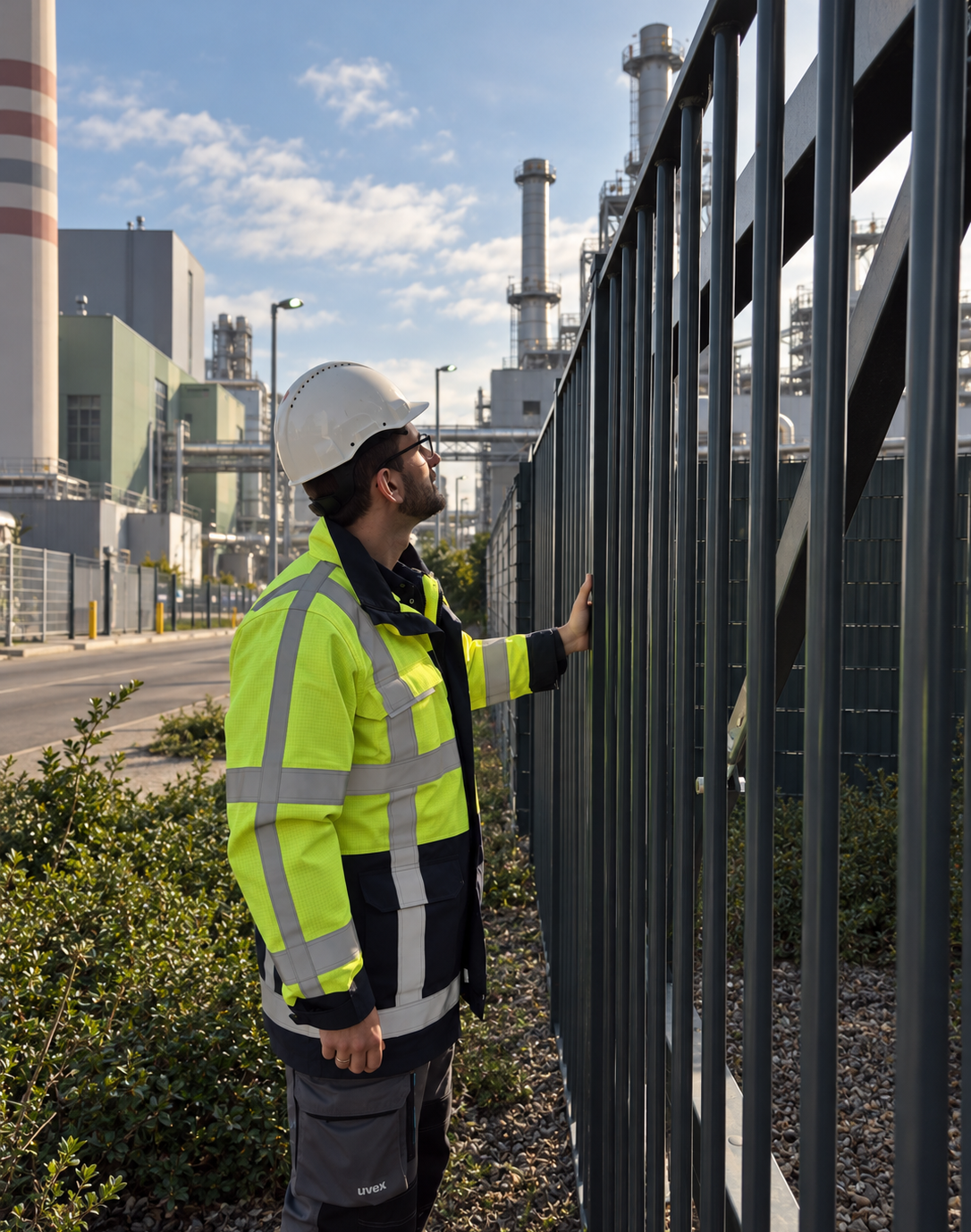
A Site Security Plan turns risk into coordinated protection
CCTV, access control or instructions for security officers do not, on their own, constitute a coherent security solution. Effective protection depends on how prevention, detection, delay, verification, response and organisational decision-making work together within the operating model of the site.
The plan therefore defines more than technology. It sets out what needs to be protected, which threats and vulnerabilities are relevant, what level of security is required and how protective measures should work together in practice. In line with UK protective-security guidance, the SSP should be informed by a Site Security Risk Assessment and the associated security strategy, and provide a practical basis for detailed procedures, contingency arrangements and day-to-day security delivery.
This service focuses on the physical and organisational security of sites, buildings and facilities. Interfaces with information security, Business Continuity Management and Emergency and Crisis Management are considered where relevant, without replacing those specialist management systems.
When a Site Security Plan is particularly useful
This type of site security planning is especially valuable where protective measures have evolved over time, lack a consistent rationale or no longer reflect current operations and risk. Typical starting points include:
- A site, building or facility is being newly planned, extended, refurbished or significantly repurposed.
- Existing security measures need an independent review and a risk-based order of priority.
- Access control, CCTV, perimeter security and security guarding do not operate as one coordinated protection system.
- The threat environment has changed, or an incident has exposed weaknesses in existing arrangements.
- Several sites need transparent minimum security requirements without ignoring local conditions.
- Internal policies, client expectations, insurance requirements or regulatory obligations must be translated into practical security measures.
- Responsibilities, alerting and escalation procedures, or the treatment of residual risk are not clearly defined.
Our Site Security Plan services
The exact scope depends on the site, its use, the threat environment and the arrangements already in place. An engagement can begin with a focused review of an existing Site Security Plan or cover the full development of a new plan, including the underlying risk assessment, security requirements and implementation roadmap.
Baseline review and site survey
We review relevant policies, plans, procedures and existing security measures, and align the assets, areas and stakeholders that need to be considered. During a site survey, we examine factors such as the site perimeter, building envelope, access points, sensitive areas, technical infrastructure, operational processes and interfaces with contractors or service providers.
Threat, vulnerability and risk assessment
We develop a clear picture of the security context and relevant threats, considering plausible scenarios, threat actor profiles, accidental or environmental hazards where relevant, and existing vulnerabilities. Current controls are included in the assessment. The result is a prioritised risk picture that supports transparent security decisions and resource allocation.
Security objectives and plan requirements
Together, we define which people, assets, processes, information and facilities require protection and to what level. Clear security objectives make the intended level of protection testable and provide a consistent basis for the plan, including requirements for zones, access, monitoring, response and supporting procedures.
Plan structure, implementation roadmap and advisory support
We translate the agreed security requirements into a practical plan and assess measures according to their contribution to risk reduction, urgency, dependencies and feasibility. This creates a prioritised implementation roadmap with defined responsibilities and sensible delivery stages. Where required, 3-core supports coordination with internal functions, planners, architects, engineering teams and service providers.
Assurance, review and continual improvement
The SSP must reflect how the site is actually used and should be reviewed when circumstances change. We therefore define appropriate assurance and review cycles. Inspections, exercises, audits or targeted tests can provide evidence of whether measures work together as intended and where the plan or its supporting procedures need to be improved.
How we develop your Site Security Plan
- Define the brief and scope: agree objectives, assets, sites, stakeholders, interfaces and applicable requirements for the plan.
- Establish protection requirements and the current state: review documentation, operations, infrastructure and existing protective measures.
- Assess threats and vulnerabilities: combine relevant scenarios, the security environment, vulnerabilities and existing controls within a traceable risk assessment.
- Define security objectives: agree the required level of protection, security zones and decision criteria.
- Develop and prioritise the plan: combine physical, technical, organisational and personnel measures within one coherent framework and define the required supporting procedures.
- Embed implementation and improvement: define the roadmap, responsibilities, assurance activities and triggers for review, with ongoing advisory support where required.

What you receive
The output is not a generic list of controls. It is a practical Site Security Plan that supports management decisions, implementation, day-to-day security delivery and assurance. Depending on the agreed scope, deliverables may include:
- a documented scope and transparent baseline assessment
- assessment of protection requirements, threats, vulnerabilities and security risks
- defined security objectives and requirements for relevant security areas or zones
- a documented SSP covering physical, technical, organisational and personnel security measures
- prioritised recommendations and an implementation roadmap
- defined roles, responsibilities, alerting and escalation procedures
- documented residual risks and management decisions still required
- an approach for assurance, review and continual improvement
Typical applications
Existing sites, buildings and industrial premises
Existing locations are assessed on a risk basis. Security zones, access routes, perimeter protection, technical security and operational procedures are brought together in a practical Site Security Plan that supports consistent day-to-day delivery.
New builds, refurbishment and change of use
Security requirements are introduced early into design and operating concepts. This helps reduce costly retrofitting and allows physical, technical and organisational measures to be coordinated from the outset. The SSP can then translate the security risk assessment and associated security strategy into site-specific requirements, responsibilities and procedures.
Critical and high-protection facilities
For facilities with high operational, supply or protection significance, dependencies, threat scenarios and potential impacts are examined in greater depth. The resulting plan provides a robust basis for prioritised protective and resilience measures, clear responsibilities and proportionate operational controls.
Sub-strategies and specific security questions
Depending on the requirement, we develop or review security zoning, access control, CCTV, perimeter security, protest and demonstration management, or security and emergency procedures. These elements are embedded within the overarching plan so that individual measures do not become isolated solutions.
Case studies: site security planning in practice
Selected 3-core projects show how risk assessment, security strategy, security objectives and implementation planning are translated into practical site security solutions for different operational environments.
Security Strategy and Security Zoning for a Pharmaceutical Company
Security Strategy for Critical Land and Maritime Infrastructure
Security Consulting for a New Build
Free guide to site security planning
The guide provides an initial technical orientation and helps structure the key questions for further planning. It does not replace a site-specific security risk assessment or the development of a complete Site Security Plan.
DOWNLOAD THE FREE GUIDE
Frequently asked questions about Site Security Plans
An SSP is the site-specific framework for managing protective security in a coherent, risk-based and proportionate way. It should be informed by the Site Security Risk Assessment and associated security strategy, and translate those findings into practical security requirements, responsibilities, procedures and protective measures. Depending on the site and scope, this can include governance, personnel security, physical security, response arrangements and interfaces with information security.
Typical elements include the scope and description of the site, relevant assets and protection requirements, reference to the risk assessment, security objectives, zoning and physical security requirements, roles and responsibilities, access and visitor arrangements, security guarding, surveillance and detection, alerting and escalation procedures, response arrangements, assurance, review and continual improvement. The exact structure should reflect the site, organisation, threat environment and purpose.
Yes. A review can assess the existing SSP, supporting procedures and implemented measures for consistency, completeness, currency and practical effectiveness. The findings can then be translated into gaps, priorities and specific improvement actions.
The timescale depends on the number and complexity of sites, available documentation, required site surveys, stakeholders and the level of detail expected. After scoping, 3-core can define the work packages, required client input and a realistic delivery plan.
No. The SSP focuses on the protective-security arrangements for a site or facility and the operational measures required to manage relevant security risks. An ISMS governs information security, while Business Continuity Management addresses the continuity and recovery of time-critical activities. The systems should have well-defined interfaces, but they remain distinct disciplines.
Develop your Site Security Plan on a clear, risk-based basis
Would you like to assess a site, review an existing Site Security Plan or develop a new one? In a free kick-off meeting, we clarify the objective, scope and the most appropriate next steps.