
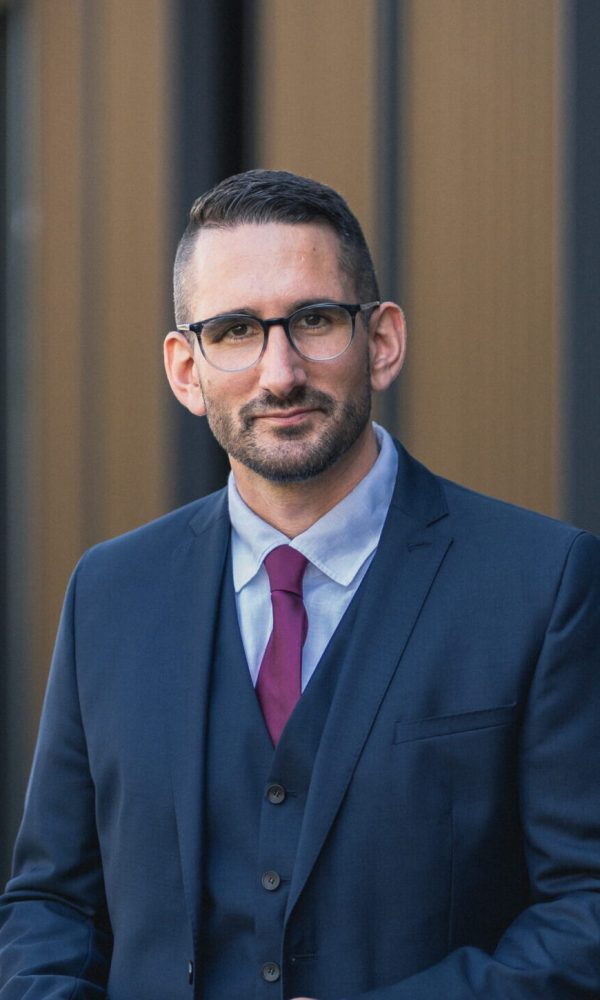
Stefan Erdweg
Managing Director of 3-core GmbH | Lecturer at HfÖV Bremen | Speaker and Media Expert
Stefan Erdweg founded 3-core GmbH in 2019 and has served as its Managing Director ever since. With more than 20 years’ experience in strategic security and crisis management, he advises businesses and critical infrastructure operators on hybrid threats, physical security, business continuity and crisis management.
His professional perspective is both international and interdisciplinary. Stefan Erdweg studied Risk and Security Management at the Hochschule für Öffentliche Verwaltung Bremen (HfÖV Bremen), completed a Master of Arts in International Politics with a focus on Critical Geopolitics at Newcastle University, and subsequently earned an MBA in General Management from IU International University of Applied Sciences.
WDR and WELT TV consult Stefan Erdweg as an expert on critical infrastructure protection and countering hybrid threats. In interviews and presentations, he analyses attacks, acts of sabotage, drone incidents and hybrid threats, translating them into tangible implications and practical options for operators, executive teams and security leaders.
Latest Media and Television Appearances
Stefan Erdweg live on WDR: Power Grid Under Pressure – Rules for Critical Infrastructure Protection
Stefan Erdweg live on ntv: Preparing for Power Outages After Power-Grid Sabotage
Stefan Erdweg live on ntv: Power-Grid Sabotage and the Protection of Critical Infrastructure
Stefan Erdweg on WDR: Attacks, Sabotage and the Protection of Critical Infrastructure
Stefan Erdweg live on WDR: How Secure Is Germany’s Critical Infrastructure?
Stefan Erdweg live on WELT TV: Attacks on Substations and the Physical Protection of Critical Infrastructure
Stefan Erdweg live on WELT TV: Vulnerability of the Power Supply After an Attack
Stefan Erdweg live on WELT TV: Weapons Cache Near Berlin and Hybrid Warfare
Stefan Erdweg live on WELT TV: Countering Drones at German Airports
Stefan Erdweg live on WELT TV: Attack on the TGV Network and Protection of Rail Infrastructure
Stefan Erdweg live on WELT TV: Terrorist Attack Near Moscow and the Limits of Prevention
Selected Talks, Panels and Conferences
Stefan Erdweg at the DVGW Congress: The Iran and Ukraine Conflicts as Risks for Critical Infrastructure Operators
Stefan Erdweg on the Panel at the VKU Critical Infrastructure Forum: From Security Strategy to Everyday Practice
Stefan Erdweg at PROTEKT: Resilience Through Detection, Delay and Intervention
Stefan Erdweg at PROTEKT: Geopolitical Risks and Security Strategies for LNG Terminals
Stefan Erdweg at the European Police Congress: Protecting Maritime Infrastructure and LNG Terminals
Stefan Erdweg at the MARISSA International Symposium: Protecting Maritime Critical Infrastructure Using an LNG Terminal as a Case Study
Stefan Erdweg at PROTEKT: Security Requirements for the Wilhelmshaven LNG Terminal
Teaching and Knowledge Transfer
Alongside his role as Managing Director, Stefan Erdweg lectures at the Hochschule für Öffentliche Verwaltung Bremen (HfÖV Bremen), where he teaches the principles and techniques of security management. The combination of teaching, consultancy practice and public debate on security shapes both his presentations and his media contributions.
Articles and Interviews by Stefan Erdweg
Stefan Erdweg in an ES&T Expert Article: Supply Shortages as a Weapon
Stefan Erdweg on tagesschau.de: How Critical Infrastructure Can Be Better Protected
Stefan Erdweg in an Interview with the German Association for Small and Medium-Sized Businesses: Corporate Resilience and Crisis Management
Stefan Erdweg in an Expert Article for GIT SICHERHEIT: Recommendations on the KRITIS Umbrella Act and NIS2
Stefan Erdweg in GIT SICHERHEIT Magazine: New Requirements for Companies
Profile of Stefan Erdweg
Stefan Erdweg has more than 20 years’ experience in strategic security and crisis management. Before founding 3-core GmbH, he worked as a Senior Security Consultant from 2013 to 2018 on a long-term assignment for E.ON SE. He previously gained experience in Group Security at RWE AG and METRO AG.
His professional experience includes security audits, OSINT-supported risk assessments, corporate security, the protection of employees, travellers and projects, and the development of robust security, crisis-management and business-continuity structures. This combination of corporate security, operator experience and consultancy continues to shape his perspective on critical infrastructure.
His selected qualifications include Certified Information Security Manager® (CISM®), Business Continuity Manager – Emergency Management certified by TÜV NORD CERT, and Port Facility Security Officer (PFSO). Stefan Erdweg has also lectured at the Hochschule für Öffentliche Verwaltung Bremen since 2020.
Areas of Expertise
Hybrid Threats and Protective Security
Analysis of sabotage, espionage, drones, interference and combined physical and digital attack scenarios, together with their implications for operators and organisations.
Corporate Resilience and Business Continuity
Business impact analysis, BCM in accordance with BSI Standard 200-4 and ISO 22301, emergency operations, recovery, and robust mapping of dependencies between processes and resources.
Critical Infrastructure Protection
Risk-based physical security, security concepts, perimeter security, detection, access control, response and organisational security standards for critical infrastructure environments.
Geopolitics and the Security Environment
Translation of geopolitical developments and shifts in global power into tangible risks for energy, water, transport, logistics, industry and other critical sectors.
Drones and Emerging Attack Vectors
An integrated approach to detection, identification, assessment, decision-making and response, including organisational responsibilities and emergency procedures.
Crisis and Emergency Management
Crisis-management structures, decision-making capability, alerting, situational management, crisis communications, exercises and simulations under realistic conditions.
Topics for Media Enquiries
Stefan Erdweg is available to newsrooms and editorial teams for interviews, live broadcasts, background briefings and expert analysis of current security situations and threat environments.
- Hybrid threats to critical infrastructure
- Sabotage, espionage and physical attacks on energy, transport and utility infrastructure
- Drones as a security risk: detection, assessment, responsibilities and response
- The German Critical Infrastructure Umbrella Act, NIS2 and the practical implementation of resilience requirements
- Physical security, perimeter security, access control, video surveillance, detection and response
- Business continuity management and the recovery of critical processes
- Crisis management, crisis-management teams, exercises and decision-making under time pressure
- Geopolitical risks and their operational implications for operators and businesses