
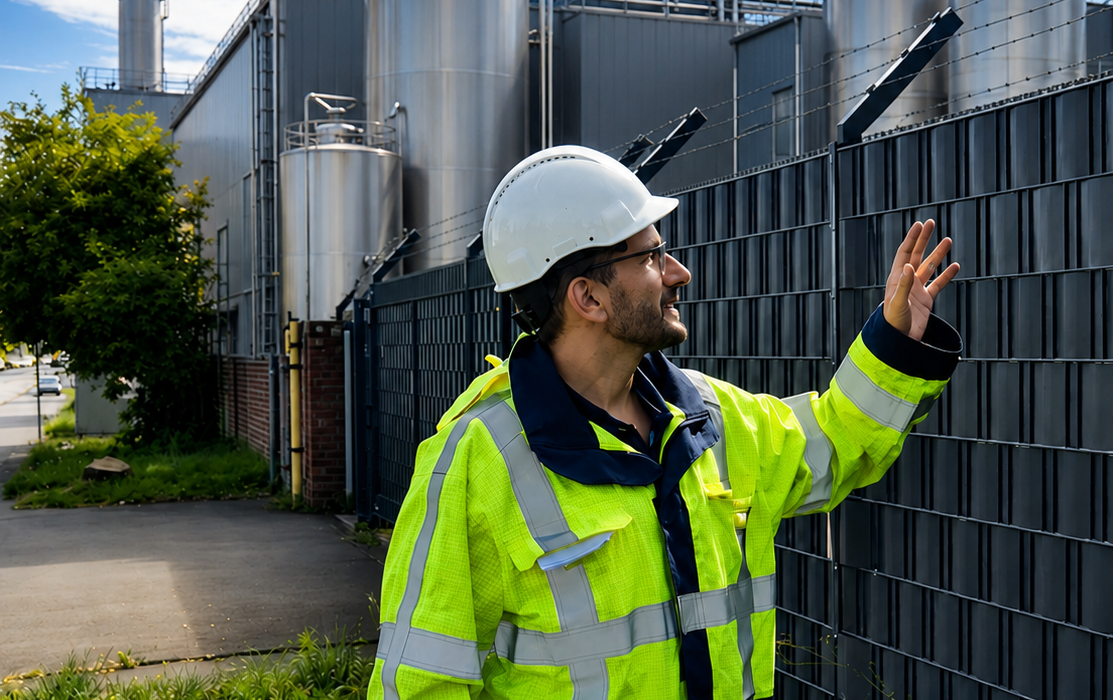

An employee wearing a neon-yellow high-visibility jacket, a white safety helmet, and protective glasses is carrying out a risk analysis in the outdoor area of a brewery. He is standing next to a tall, dark-grey security fence topped with barbed wire and is pointing with his right hand toward a section of the facility. In the background, several large stainless-steel tanks, pipelines, technical structures, and tall exhaust stacks of the brewery are visible. Access to the area is provided by a paved pathway bordered by a grassed area. The scene depicts a safety-related site inspection under clear skies and bright daylight.

Risk Analysis at the Brewery Site

A brewery is far more than a facility where beer is produced. It is a complex production site with sensitive processes, specialized infrastructure, stringent hygiene requirements, significant logistical relevance, and site-specific dependencies. As part of this project, 3-core was commissioned to conduct a risk analysis for a brewery. The objective was to assess the criticality of the site, evaluate relevant threats and hazards at national, corporate, and site level, and derive appropriate protection objectives and recommended mitigation measures.

When a Site Becomes a Critical Bottleneck

In manufacturing companies, security is often considered primarily in terms of individual protective measures: plant security, access control, perimeter fencing, video surveillance, technical monitoring, or alarm systems. While these measures are important, they are insufficient unless the strategic importance of the site to the overall organization has first been clearly established.

For a brewery, this issue is particularly relevant because several critical factors converge at a single location:

  • core production processes,
  • specialized machinery and technical infrastructure,
  • stringent hygiene and food-safety requirements,
  • dependencies on water, energy, refrigeration, and logistics,
  • site-specific and non-transferable processes,
  • potential impacts on supply capability, customers, and corporate reputation.

The risk analysis therefore did not begin by asking which individual security measure was missing. Instead, it focused on a more fundamental question: What would happen if the site became partially or completely unavailable?

This perspective changes the assessment approach. A door, technical room, or utility installation is no longer evaluated in isolation, but in the context of production, logistics, operational recovery, reputation, and business continuity.

A risk analysis is a structured process used to assess potential threats, vulnerabilities, and impacts. It enables organizations not only to identify risks, but also to prioritize them in a transparent and traceable manner.

The Assignment for 3-core

3-core GmbH was commissioned to conduct a risk analysis for the brewery. The objective was to assess the site’s criticality and threat exposure, identify existing vulnerabilities, and derive appropriate protection objectives and recommended measures.

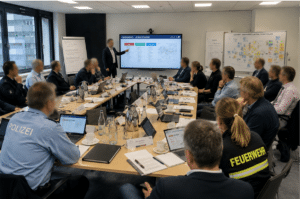
The analysis was based on an on-site inspection, a joint kick-off meeting, and a subsequent multi-level assessment. The scope extended beyond structural and technical security aspects to include organizational processes, operational dependencies, recovery capability, and external influencing factors.

Criticality Analysis: Why the Site Is Highly Critical

A key component of the project was the criticality analysis. This analysis assessed the extent to which overall business operations depend on the site and the potential consequences of a prolonged disruption or complete site outage.

The assessment considered, among other factors:

  • the site’s importance to business operations,
  • substitutability and alternative operating options,
  • dependencies on specialized infrastructure,
  • regulatory and contractual requirements,
  • potential impacts on customers and corporate reputation,
  • integration into upstream and downstream processes,
  • recovery capability and potential loss exposure.

The analysis demonstrated that the site is highly critical to the company’s value chain. Core brewing processes and essential logistics operations are concentrated at this location. At the same time, the site is subject to location-specific dependencies, including specialized production equipment, technical infrastructure, energy supply, and water supply.

The availability of alternative operating arrangements was also a key consideration. The more difficult it is to replace or relocate a site at short notice, the greater the importance of preventive measures, emergency and contingency planning, and a robust security concept.

Risk Analysis at Three Levels

To obtain a comprehensive risk profile, the risk analysis was not limited to the site itself. 3-core assessed risks across three levels.

1. Country Level

At country level, the broader operating environment was assessed. Established indices such as the Global Peace Index, the Fragile States Index, the Worldwide Governance Indicators, the Corruption Perceptions Index, and the Global Organized Crime Index were used as reference points. This dimension of the risk analysis supports the assessment of external framework conditions, including political stability, the overall security environment, government effectiveness, corruption exposure, and organized crime.

2. Corporate Level

At corporate level, the risk analysis focused on dependencies and potential impacts on the organization as a whole. Key considerations included supply capability, reputational risks, regulatory requirements, dependencies on external service providers, critical resources, and operational recovery capability.

The analysis demonstrated that a security incident at the site may have consequences extending far beyond an individual building or operational area and may affect the entire value chain.

3. Site Level

At site level, the risk analysis examined specific structural, technical, and organizational risks. This included access points, security perimeters, production and technical areas, logistics zones, utility supplies, alarm and notification systems, security response capabilities, and operator processes.

This level of analysis showed where abstract risks materialize in practice and which vulnerabilities are particularly relevant to the brewery.

From Risk Analysis to Protection Objectives

Following the risk analysis, the findings were not treated merely as a list of deficiencies. The key objective was to translate the identified risks and vulnerabilities into specific protection objectives.

Protection objectives define the security outcomes that must be achieved at the site. For the brewery, the following objectives were of particular importance:

  • safeguarding production and supply capability,
  • preventing unauthorized access to sensitive areas,
  • reducing the risk of interference with equipment and operational processes,
  • enabling the early detection of security-relevant incidents,
  • establishing clear and traceable alarm and escalation procedures,
  • protecting sensitive information,
  • strengthening emergency response and operational recovery capability,
  • limiting the impact on customers, business operations, and corporate reputation.

This creates a clear link between risk analysis and implementation: every security measure must contribute to a specific protection objective.

Risk Analysis Recommendations: Priorities Rather Than Isolated Measures

The recommendations were structured according to their expected impact and implementation timeframe.

In the short term, the focus was on measures that could achieve rapid risk reduction, such as clarifying organizational responsibilities, reviewing access-control and authorization processes, protecting sensitive information, and addressing evident vulnerabilities.

In the medium term, the priority was to establish consistent security standards. These included requirements for sensitive areas, access control, perimeter security, detection, alarm and notification systems, service-provider processes, and emergency preparedness.

In the long term, site security should be embedded as a continuous management process. This includes regular risk analysis reviews, effectiveness assessments, exercises, training, clearly defined escalation procedures, and integration into the organization’s overarching risk-management framework.

Risk Analysis Makes Site Security Manageable

A brewery is a complex production site with a high degree of dependency on technology, infrastructure, logistics, and stable operational processes. A risk analysis helps to make these interdependencies transparent and enables security measures to be prioritized in a systematic and traceable manner.

This transforms site security from a reactive function into a manageable process—based on a clear criticality assessment, a structured risk profile, specific protection objectives, and measures targeted at those areas where a security incident would have the greatest impact.

Our Security Services

Site Inspection and Baseline Assessment

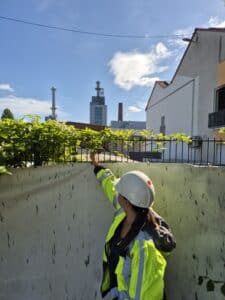
3-core conducted an on-site security assessment of the brewery as part of the risk analysis. The assessment covered structural, technical, and organizational aspects of site security, including security perimeters, access points, sensitive production and technical areas, logistics zones, utility supplies, and existing security processes.
Analysis of Relevant Documentation

In addition to the site inspection, existing documents, policies, and records were reviewed and analyzed. The analysis focused on organizational procedures, roles and responsibilities, security requirements, emergency preparedness, and site-specific information.

Criticality Assessment

3-core assessed the site’s significance for production, logistics, value creation, and operational recovery as part of the risk analysis. This provided a transparent and well-founded basis for classifying the site as highly critical and identifying the dependencies of greatest relevance.

Multi-Level Risk Analysis

The risk analysis was conducted at country, corporate, and site level. This resulted in a comprehensive risk profile that integrates external framework conditions, organization-wide impacts, and specific site vulnerabilities.

Derivation of Protection Objectives and Measures

Based on the findings of the risk analysis, specific protection objectives and prioritized recommendations for action were developed. The aim was to combine short-term risk reduction, medium-term standardization, and long-term security management.

Explore more: Projects & other articles